Why Digital Transformation Fails (and How to Get It Right)
Most enterprises add tools but keep the same fragmentation. Here is why transformation stalls—and a practical path to integration, automation, and outcomes that actually show up in the P&L.

Boards still sign off on "digital transformation" while teams spend their weeks reconciling spreadsheets. The gap is not ambition—it is architecture. Until data, workflows, and decisions sit on one coherent foundation, every new tool is another island.
This article is for enterprise leaders who are tired of buying software and hoping the business changes. It explains why programmes stall, what good looks like, and how to phase work so value lands early without a big-bang rebuild.
The reality most companies face
Many organisations invest in digital tools but still struggle with the same underlying problems:
- Data sits in different systems—and definitions rarely match
- Reports do not tie out between finance, operations, and commercial teams
- People rely on manual workarounds because the official process is too slow
- Decisions wait on meetings, not on trusted numbers
On paper the business looks "digital". In practice it is a patchwork. That is not a failure of effort; it is what happens when technology is layered onto broken structure.
Where things go wrong
Digital transformation often fails for predictable, fixable reasons:
1. Too many disconnected tools
New systems arrive to solve a point problem, but nobody retires the old workflow. Data gets harder to manage, not easier—because each tool has its own master data, rules, and exports.
2. No single source of truth
Finance, operations, and leadership often work from different numbers. Everyone defends their spreadsheet because it is the only place they trust. Consensus becomes negotiation instead of analysis.
3. Manual processes still exist
Email approvals, re-keying between systems, and offline trackers continue in the background. That creates operational risk, audit pain, and a hidden tax on every close and forecast cycle.
4. Focus on tools, not outcomes
Buying software is not transformation. Without measurable goals—cost to serve, cycle time, error rate, compliance confidence—the business never sees the value, and the programme loses executive air cover.

What effective transformation looks like
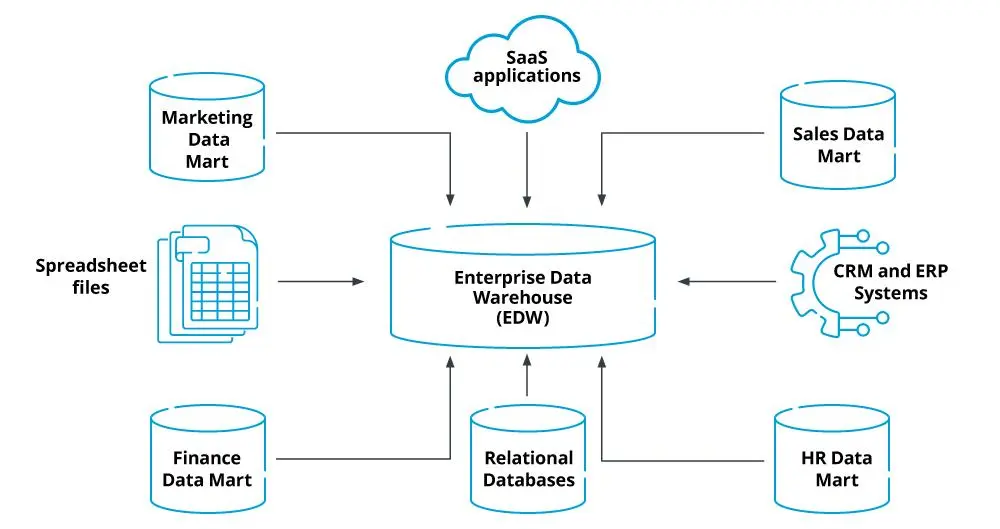
Strong digital transformation puts structure first, then tools. The aim is a small number of governed data flows and repeatable workflows—not a longer vendor list.
It usually includes:
- Enterprise data integration — Data from core systems lands in a central model. Definitions align, lineage is clear, and reporting is built once.
- Automated workflows — High-friction paths (finance close, procure-to-pay, operational handoffs) run consistently without inbox tennis.
- Real-time visibility — Dashboards reflect current performance, not last week's static pack.
- Predictive analytics — Teams see what is likely to happen next, not only what already happened.
- AI-driven insights — Models turn clean data into recommended actions, with guardrails—not vanity charts.
Ellisdata helps organisations move in this direction with services aimed at integration and automation, alongside the Invoice Platform where structured AP workflows are a practical first win.
What this means for the business
When the foundation is right, the impact shows up in operational metrics and leadership confidence:
- Less time spent reconciling and firefighting data
- Faster decisions with fewer alignment meetings
- Consistent reporting across teams and entities
- Better control over cash, risk, and compliance
- Reduced exposure to manual error and fraud pathways
It is not about working harder. It is about removing friction so the organisation can scale without linear headcount growth in the back office.
A practical approach
Most enterprises do not need a full rebuild. They need a sequenced programme that proves value in quarters, not years.
- Fix the data foundation — Bring priority data sources together, standardise definitions, and agree ownership. No analytics programme outruns bad masters.
- Automate core workflows — Start where volume and risk are high: finance operations, reporting, supplier payments, or regulatory reporting packs.
- Introduce visibility — Ship dashboards tied to those workflows so leaders see the same timeline and definitions.
- Layer in analytics and AI — Once data is stable, forecasting and assisted decision-making compound returns instead of amplifying noise.
This sequence keeps investment tied to outcomes. It also builds organisational muscle: each phase teaches the business how to govern change, not just install products.
Designed for complexity
This pattern fits especially well when you recognise your environment in the list below:
- Multiple systems and data sources across regions or divisions
- High transaction volumes where small errors become material fast
- Complex operational workflows with many handoffs
- Growing reporting, audit, and regulatory demands
In these settings inefficiency does not stay local—it compounds. That is why integration and workflow discipline are not IT side projects; they are core to how the enterprise competes.
Final thought
Digital transformation is not about adding more tools. It is about building a system where data, workflows, and decisions connect—and where the business can move faster with less heroic effort.
If that is the outcome you want, start with structure and proof points, not another RFP for a magic platform. The technology matters, but sequence and governance decide whether anything sticks.
Ellisdata works with enterprise teams to connect data, automate high-volume finance workflows, and deliver visibility without adding another disconnected tool on top.